Author: Assoc. Prof. Dr. Nguyen Nhu Quy, former Lecturer in the Department of Building Materials Technology, Faculty of Building Materials
"The crack in the Son La Hydropower Plant may have saved my life."
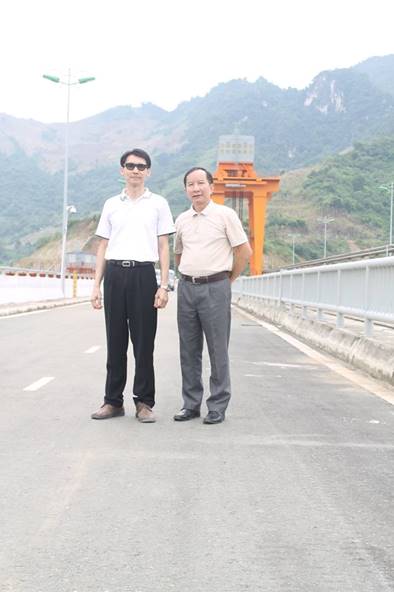
Ten years have passed since the first roller-compacted concrete block was laid at the Son La Hydropower Plant in May 2008. The atmosphere at the construction site then reminded me of the spring offensive campaign many decades ago. The roller-compacted concrete component, designed by Elinco Switzerland under the direction of Professor Dunstain M. from the UK, was approved for implementation despite much controversy by the Vietnam Electricity Corporation (EVN).
My Japanese colleagues and I from Nipon Koye were somewhat concerned. The reason was that the roller-compacted concrete had an excessively high powder content, exceeding the necessary limit. Our proposal (from the University of Construction Consulting Company and Nipon Koye) suggested reducing the amount of fly ash from Pha Lai by 20-40 kg and increasing the amount of PC 40 cement by approximately 10 kg to reduce concrete shrinkage during hardening. Furthermore, during roller-compacted concrete construction, each layer, approximately 30 cm thick, must be cured for at least 24 hours before the next layer can be poured. However, driven by the desire to meet deadlines, the contractor disregarded this procedure and poured three layers in a single day. During that period, the developments at the construction site inevitably aroused a vague sense of unease in me – a member of the Son La Hydropower Project Acceptance Council.
In September 2008, we were invited to EVN's headquarters on HT Street, Hanoi, to hear explanations from EVN and leading experts from Elinco - Professor Dunstain M. and advisor Professor Moriss - regarding their intention to replace a portion of the fly ash processed through the Pha Lai refinery (with an unburned carbon content of 2 to 3%) with unprocessed fly ash (with an unburned carbon content of 17 to 35%). They claimed this would save a significant amount of money for a project involving approximately 3 million cubic meters of roller-compacted concrete. The two experts from Elinco argued that, according to US standards, fly ash with an unburned carbon content of up to 12% could be used; therefore, using fly ash from the Pha Lai refinery with only 2-3% unburned carbon content was an unnecessary waste (since one ton of refined fly ash cost around 600,000 VND at that time). Based on my practical knowledge and reasoning, I resolutely rejected the idea of replacing 50% of clean ash with "dirty" ash, as suggested by the experts and EVN. I still remember when the debate reached its peak, the two experts' faces turned red, and they slammed the table in extreme frustration.
At that time, we had three leading experts from Vietnam participating in the meeting (only I could use English to debate), along with Professor Thai Phung Ne – chairman of the Hydropower Project Appraisal Council, former Minister of Energy, and special envoy of the Prime Minister. I then launched a preemptive strike, boldly asking: If someone adds a drop of dirty water to a cubic meter of clean water, tell me, is that water still clean water? The entire hall fell silent. After that, Professor... Professor Thai Phung Ne spoke up, saying: "The initiative to use fly ash from Pha Lai, which has not been processed and contains a high percentage of unburned carbon, should be stopped here so we can continue to hear the opinions of Vietnamese 'scholars'."
I breathed a sigh of relief, as if a heavy burden had been lifted. With the authority granted to him, with his vision, experience, and professional intuition, Professor had done a great job for the country: stopping a hasty, unscientific action that might have been motivated by a group's interests, regardless of the importance of this largest dam in Southeast Asia, with an investment of approximately $4 billion.
Shortly afterwards, a colleague and close friend of 30 years, who had extensive connections in the scientific and investment circles, met with me and warned me to be extremely careful. He explained that a group of people had sent a message saying they would eliminate me as a troublemaker, a stumbling block hindering their plans. I spent several sleepless nights tossing and turning and decided to call the Secretary-General of the Sơn La Hydropower Project Acceptance Council. With the encouragement of the leader, I gradually regained my balance in my daily life. During that time, I sometimes thought: If only they would use death to stop dedicated scientists, then that death wouldn't be in vain.
But in November of that year, 2008, nearly six months after the first roller-compacted concrete block was poured, cracks appeared on the main dam body. The whole country was shocked, and the media reported on this event with a series of articles. My feelings at that time were quite mixed. On the one hand, I deeply regret not being able to persuade EVN to use the roller-compacted concrete component developed by the University of Civil Engineering, which I chaired (or by Nipon Koye Company), leading to shrinkage cracking, the main cause of which, in my opinion, was the excessive use of fly ash and insufficient cement in the roller-compacted concrete. On the other hand, I believe that the person who leaked the information about assassinating the scientist who exposed them has probably abandoned their vile plot. That's how the crack in the Son La Hydropower Plant may have saved my life.