


.jpg)
![[TUYỂN DỤNG] Saint-Gobain Việt Nam tại HÀ NỘI](https://scontent.fhan14-2.fna.fbcdn.net/v/t39.30808-6/713969837_4419877684890781_2172720304980381766_n.jpg?stp=dst-jpg_tt6&cstp=mx1414x2000&ctp=s1414x2000&_nc_cat=100&ccb=1-7&_nc_sid=aa7b47&_nc_ohc=FT6j_ihrecgQ7kNvwHWYDS7&_nc_oc=Adq9ZCKve7PLXTT-CVAPMq33JnNm7vkUHSQjPB9DCusMR3k66YzrMjSLSF5wJxP40hc&_nc_zt=23&_nc_ht=scontent.fhan14-2.fna&_nc_gid=kbIZLoVWblGWRUU8KpcyFw&_nc_ss=7b2a8&oh=00_Af9lgrupbfzi8TIOXzEeNotFg_DxAWPo4pa-7qomfD9WHg&oe=6A2B48C7)
.jpg)
![[TUYỂN DỤNG] CÔNG TY CỔ PHẦN ĐẦU TƯ VÀ THI CÔNG HẠ TẦNG VINALPHA](/theme/abc.jpg)
![[TUYỂN DỤNG] CÔNG TY CỔ PHẦN ĐẦU TƯ TRƯỜNG AN HẢI PHÒNG](/images/ckeditor/images/710782061_1652567360208923_3673207428400030495_n.jpg)
HISTORY AND DEVELOPMENT OF THE FACULTY OF BUILDING MATERIALS
1. HISTORY AND DEVELOPMENT
The Faculty of Building Materials is one of the fourteen academic faculties and divisions of Hanoi University of Civil Engineering (HUCE). Education in the field of Building Materials was established very early, beginning with the establishment of Hanoi University of Science and Technology in 1956. In 1957, the Department of Building Materials was established to deliver courses for the programmes under the Faculty of Construction of Hanoi University of Science and Technology.
Immediately after HUCE was established on the basis of the Faculty of Construction of Hanoi University of Science and Technology under Decision No. 144/CP dated 08 August 1966 of the Council of Government, the first intake of the Building Materials major (Cohort 11), comprising 24 students, was enrolled and taught by the Department of Building Materials and the Department of Building Materials Technology.
In 1971, the academic departments responsible for the majors in Building Materials, Water Supply and Sewerage, and Ventilation–Heating Engineering were merged to establish the Faculty of Building Materials – Sanitary Engineering. During 1986–1989, it was renamed the Faculty of Building Materials – Environmental Engineering.
In 1989, in response to the national demand for highly qualified engineers to meet the requirements of renovation and development, the Faculty of Building Materials was officially established and has continued to develop to the present day. Over nearly 60 years of education and 35 years of institutional development, the Faculty has continuously expanded in scale and education scope in terms of levels, disciplines, and specialisations.
Currently, the Faculty offers programmes at multiple levels and in various disciplines/specialisations, including:
Undergraduate level:
- Building Materials Engineering Technology (Programme code 7510105, since 1966);
- Building Materials specialisation under the Vietnam–France High-Quality Engineering Education Programme (since 2017);
- Materials Engineering (Programme code 7520309, since 2020);
- Industrial Logistics (Specialisation code 7510605-02, since 2025).
Postgraduate level:
- Doctor’s education in Materials Engineering: since 1980;
- Master’s education in Materials Engineering: since 1998. Since 2024, the Master’s programme in Materials Engineering has been restructured into two specialisations: Building Materials and Advanced Materials
It can be affirmed that throughout nearly 60 years of education, and 35 years of development, the Faculty of Building Materials has been closely associated with the maturation of the field of Building Materials Engineering and Technology. Despite limitations in the facilities of both the University and the Faculty, which have not yet fully met the increasingly high demands for education and research, the Faculty has consistently remained one of the most active and productive research units at HUCE.
Faculty members have led and participated in numerous research projects at different levels—University, Provincial/City, Ministerial, and National—and have published a substantial number of scientific papers in reputable national and international journals and conference proceedings. The Faculty consistently ranks among the top units at HUCE in terms of the number of publications per lecturer. Scientific research achievements constitute one of the Faculty’s outstanding strengths, significantly contributing to its academic reputation and education quality.
Over nearly 60 years of development, and in line with the Faculty’s strategic directions for the coming period, major research orientations have focused on the following areas:
Faculty members have led and participated in numerous research projects at different levels—University, Provincial/City, Ministerial, and National—and have published a substantial number of scientific papers in reputable national and international journals and conference proceedings. The Faculty consistently ranks among the top units at HUCE in terms of the number of publications per lecturer. Scientific research achievements constitute one of the Faculty’s outstanding strengths, significantly contributing to its academic reputation and education quality.
Over nearly 60 years of development, and in line with the Faculty’s strategic directions for the coming period, major research orientations have focused on the following areas:
- Enhancing performance properties of various materials such as binders, concrete, ceramics, polymer composites, nanomaterials, coatings, and thin films;
- Developing new materials with special properties and their manufacturing technologies;
- Designing equipment, refining, and controlling production technologies for materials and building materials to improve product quality and production efficiency;
- Utilising waste materials and local materials for the production of building materials, aiming to reduce environmental pollution, save energy and natural resources, and achieve high socio-economic and technical efficiency.
2. HUMAN RESOURCES AND FACILITIES
The Faculty of Building Materials currently has a total of 38 staff members, including 31 with postgraduate qualifications (accounting for 91.6%), comprising: 01 Professor, 07 Associate Professors, 14 PhD holders, and 09 Master’s degree holders; in addition to 07 staff members with a Bachelor’s degree. Among the 29 lectures, 100% hold postgraduate degrees, of which 21 hold doctoral degrees (72.4%). The lecturers educatedat prestigious institutions in countries such as the Russian Federation, France, the Netherlands, Germany, Japan, and Taiwan…
The Faculty of Building Materials is responsible for managing the facilities of the LAB for Testing and Studying of Building Materials and the Chemistry Laboratory. These two laboratories support education for general courses offered across the University as well as specialised courses for the Building Materials Engineering Technology and Materials Engineering programmes. The LAB for Testing and Studying of Building Materials has been certified by Hanoi Department of Construction as meeting the requirements for specialised construction testing under Certificate No. 94/GCN-SXD(GĐCL) dated 18 October 2024, with laboratory code LAS-XD 24.110.
3. NETWORKS AND PARTNERS
The Faculty of Building Materials currently has a total of 38 staff members, including 31 with postgraduate qualifications (accounting for 91.6%), comprising: 01 Professor, 07 Associate Professors, 14 PhD holders, and 09 Master’s degree holders; in addition to 07 staff members with a Bachelor’s degree. Among the 29 lectures, 100% hold postgraduate degrees, of which 21 hold doctoral degrees (72.4%). The lecturers educatedat prestigious institutions in countries such as the Russian Federation, France, the Netherlands, Germany, Japan, and Taiwan…
The Faculty of Building Materials is responsible for managing the facilities of the LAB for Testing and Studying of Building Materials and the Chemistry Laboratory. These two laboratories support education for general courses offered across the University as well as specialised courses for the Building Materials Engineering Technology and Materials Engineering programmes. The LAB for Testing and Studying of Building Materials has been certified by Hanoi Department of Construction as meeting the requirements for specialised construction testing under Certificate No. 94/GCN-SXD(GĐCL) dated 18 October 2024, with laboratory code LAS-XD 24.110.
3. NETWORKS AND PARTNERS
The Faculty of Building Materials has established an extensive network of partnerships with regulatory authorities, research institutes, manufacturing facilities, and domestic enterprises. These collaborations provide substantial support for educational activities and programme development. The Faculty is widely recognised as a reputable institution for educating building-materials engineers who possess strong professional knowledge and solid technical skills to effectively meet societal and industry needs.
Over nearly 60 years of development, the Faculty has educated more than 3,500 engineers, over 170 master’s graduates, and approximately 20 doctoral graduates, making a significant contribution to the national pool of high-quality human resources in the field of building materials. With these achievements, the Faculty of Building Materials has consistently maintained its position as one of the leading and most reputable units nationwide in education in Materials Engineering and Building Materials Engineering Technology.
The large number of graduates has formed a strong and active alumni network that contributes to academic activities, scientific research, industry collaboration, and student support, particularly in career orientation and employment opportunities.
.Prominent domestic partners include:- Vietnam Institute for Building Materials (VIBM)
- Institute for Building Science and Technology (IBST)
- Viglacera Corporation and its subsidiaries
- Vietnam Cement Corporation (VICEM) and its affiliated units
- Various building-material production enterprises nationwide: Vinaconex Xuan Mai Concrete and Construction Joint Stock Company (XMCC); Silkroad Hanoi Joint Stock Company (SilkRoadHanoi); Hanoi Construction Concrete Joint Stock Company (VIBEX); Thinh Liet Investment and Concrete Joint Stock Company - UDIC; Sao Do Tile Factory; Truc Thon Joint Stock Company (TrucThonJSC); Vicem Hoang Thach Cement Company; A My Group; Tran Phu Electromechanical Joint Stock Company; Tan A Dai Thanh Company...
- Delft University of Technology (The Netherlands)
- Bauhaus-Universität Weimar, Lübeck, Hamburg (Germany)
- Liege University, Leuven University (Belgium)
- Moscow State University of Civil Engineering – MGSU (Russian Federation)
- Sirindhorn International Institute of Technology – Thammasat University (Thailand)
- University of Liverpool, Loughborough University, Queen’s University Belfast (United Kingdom)
- National Taiwan University (Taiwan)
- Kyonggi University (Korea)
- Saitama University (Japan)
- INSA Rennes, INSA Lyon (France)
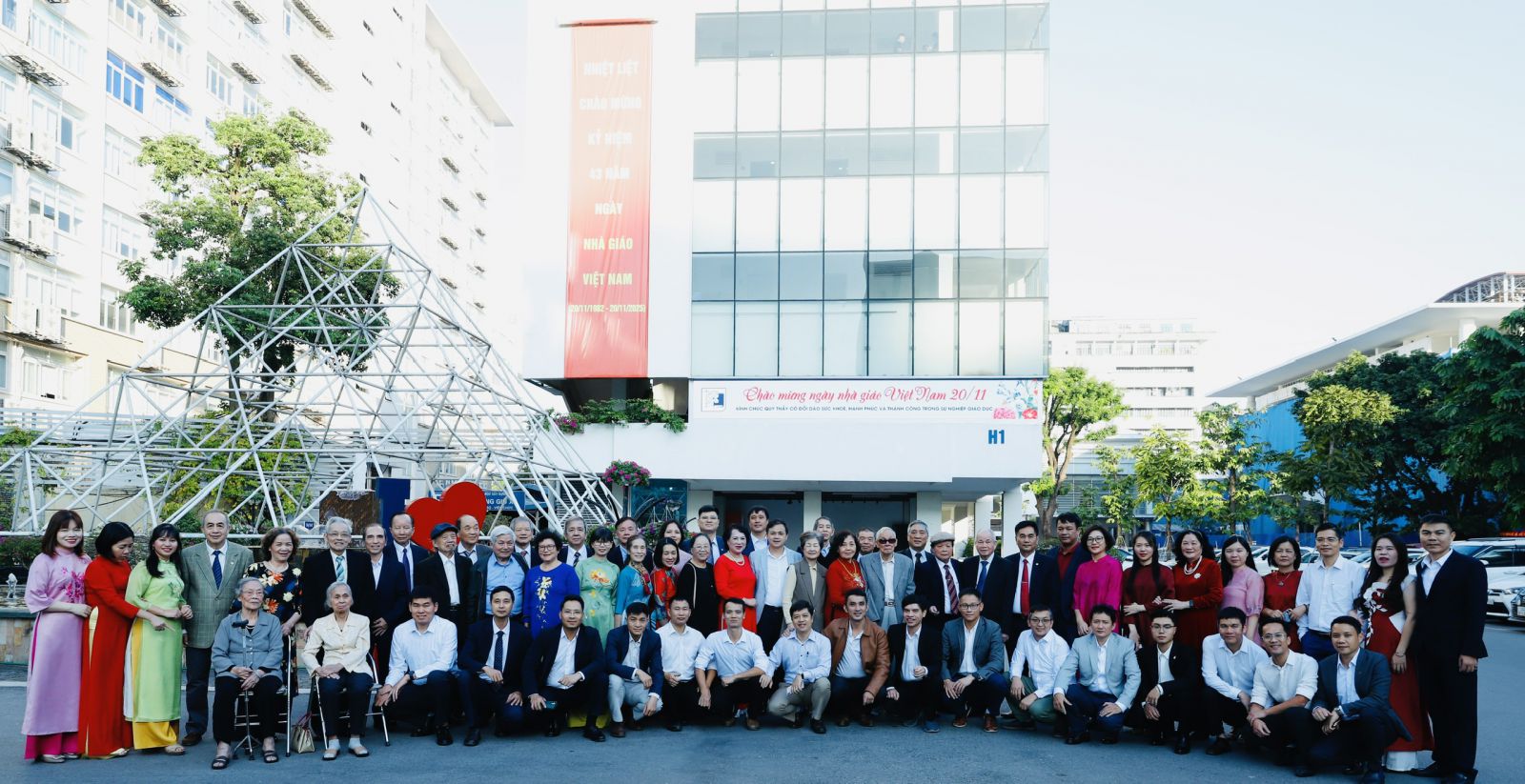
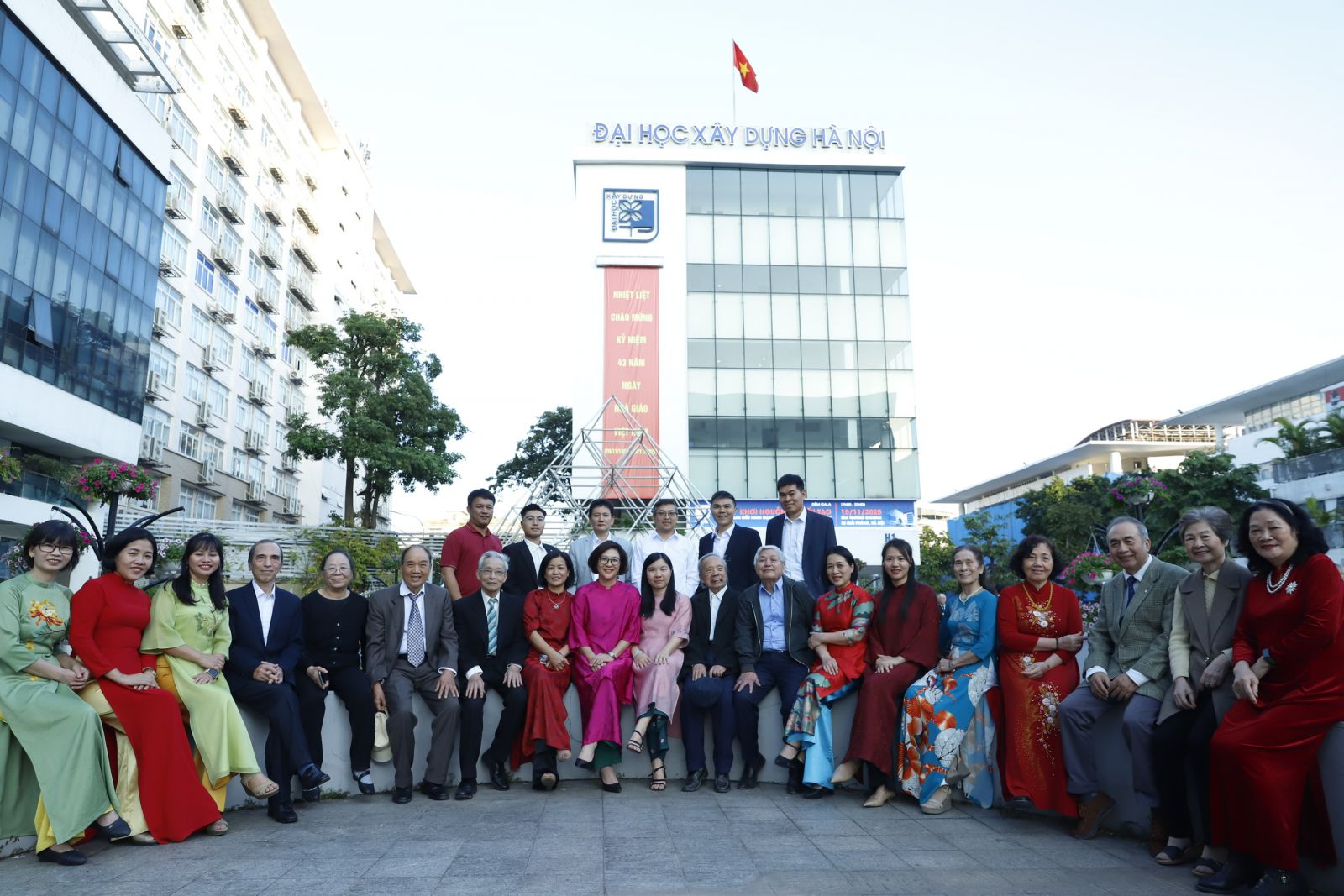
Staff members of the Faculty
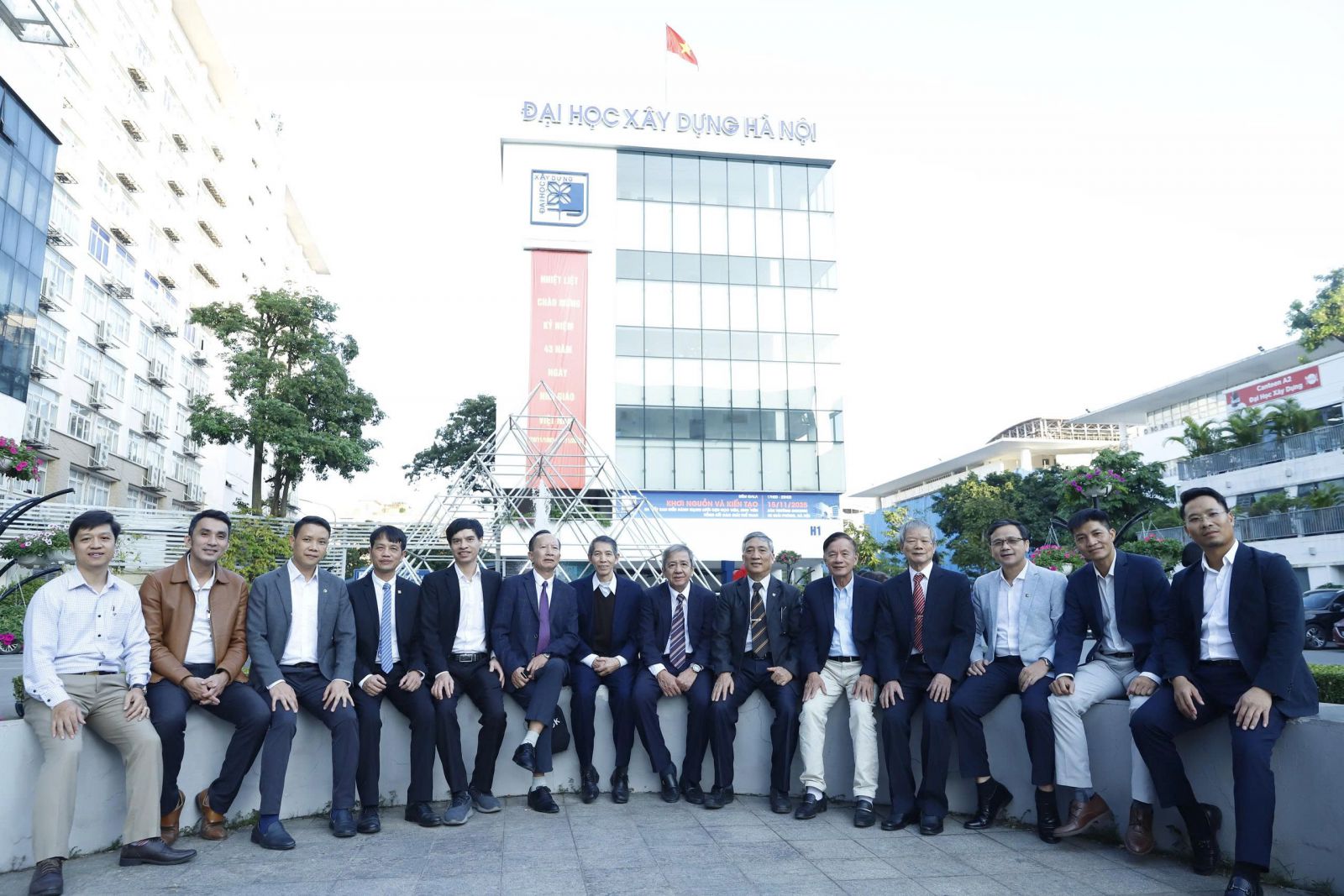
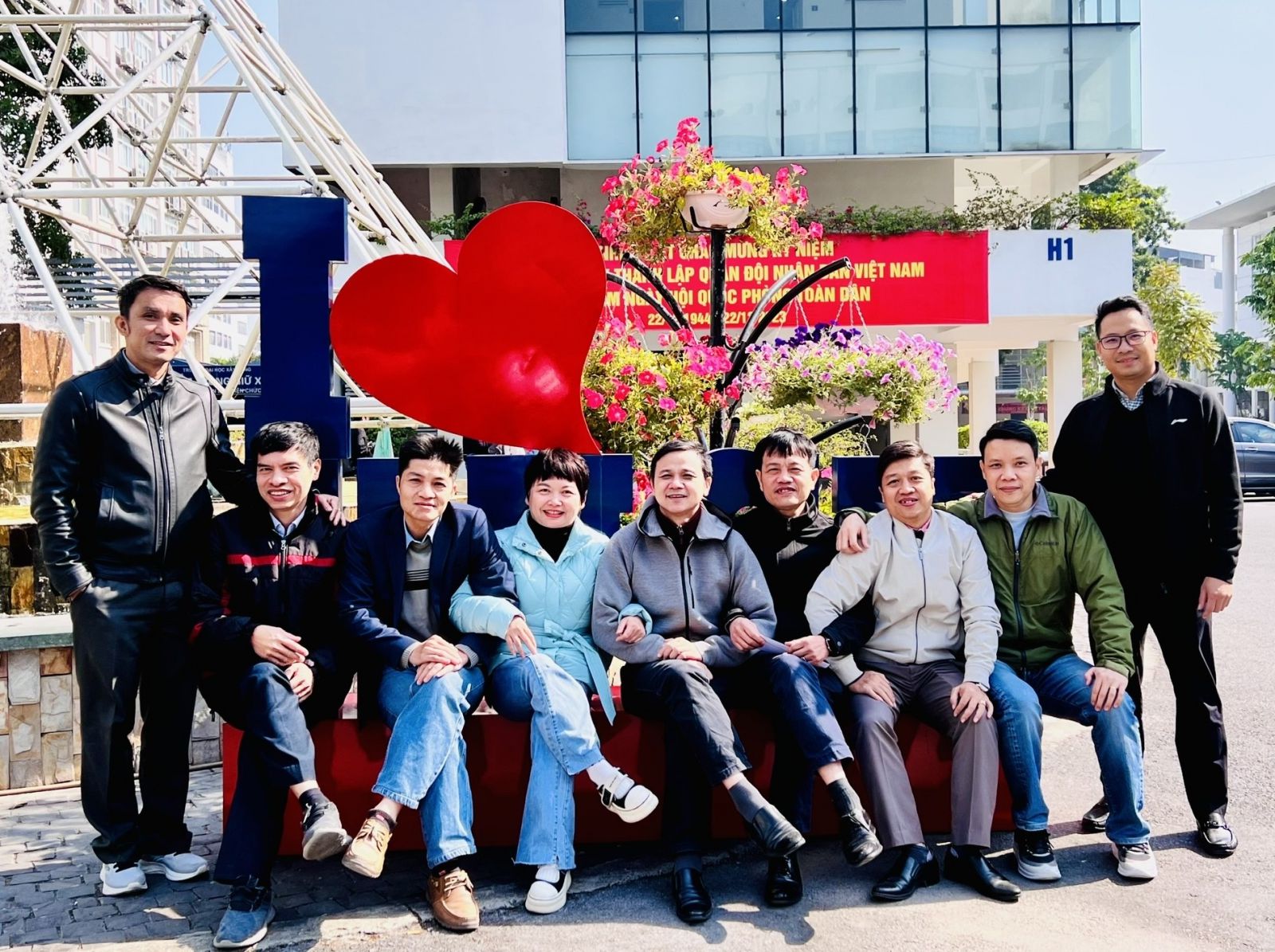
Academic Group of Building Materials Technology
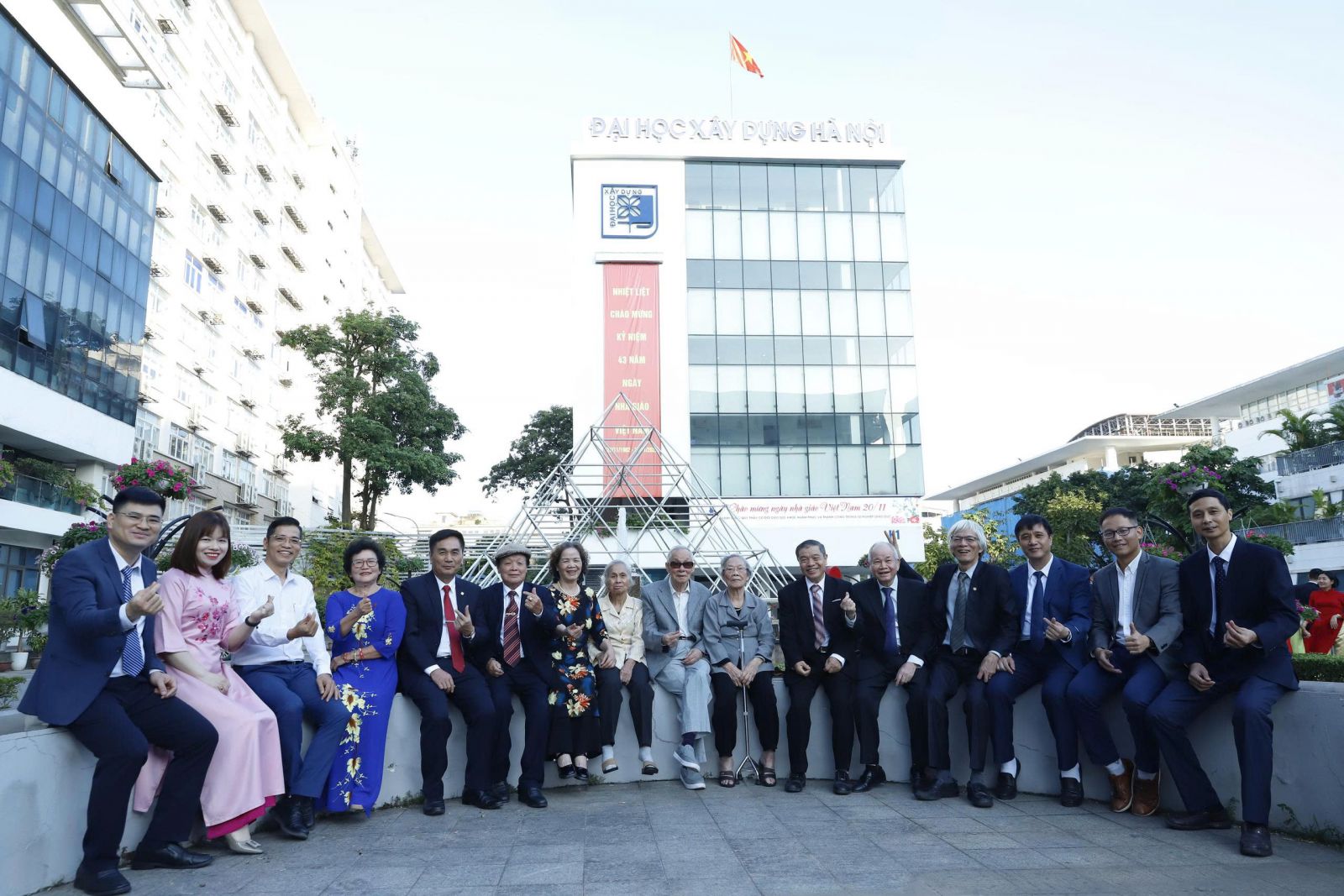
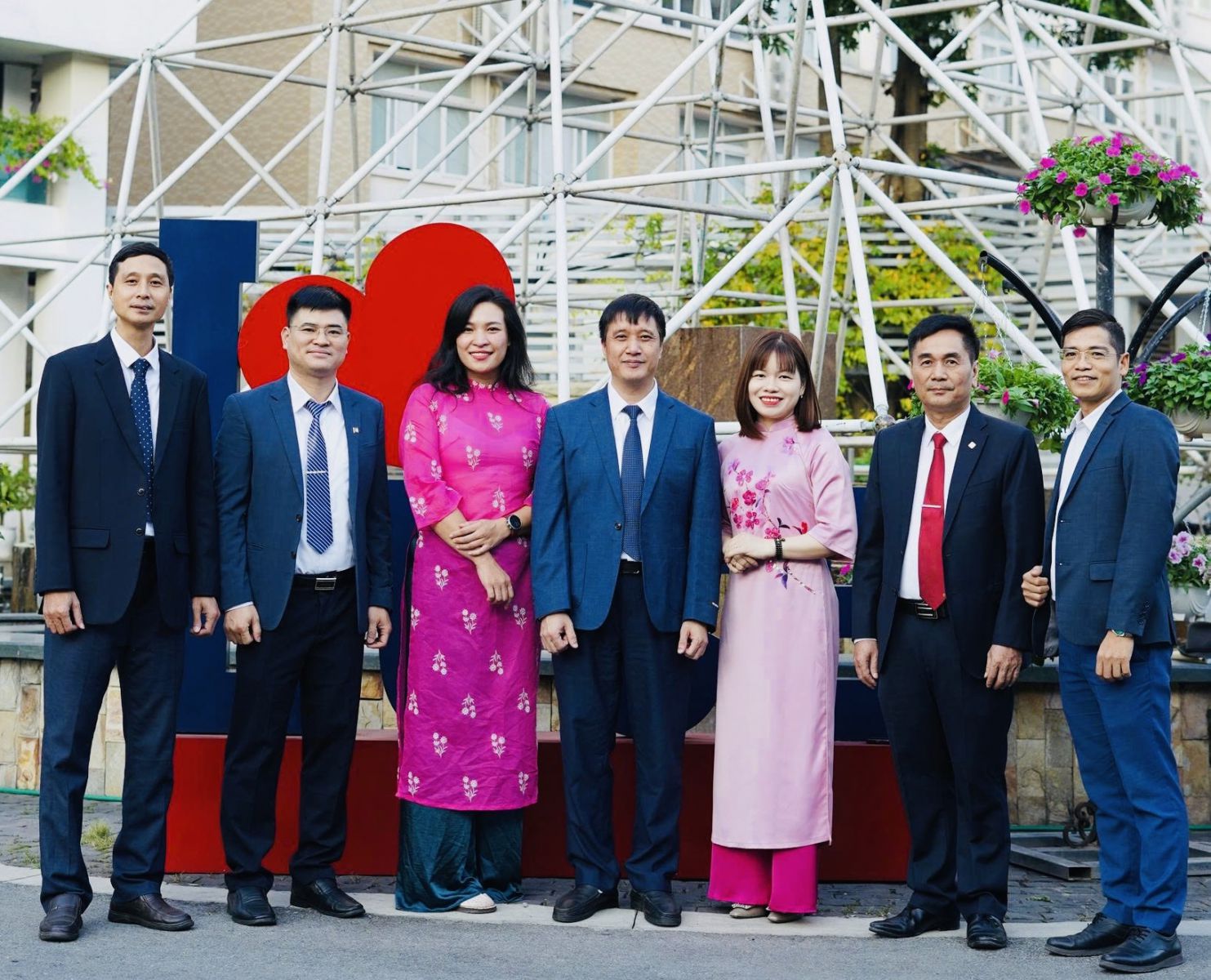
Academic Group of Building Materials
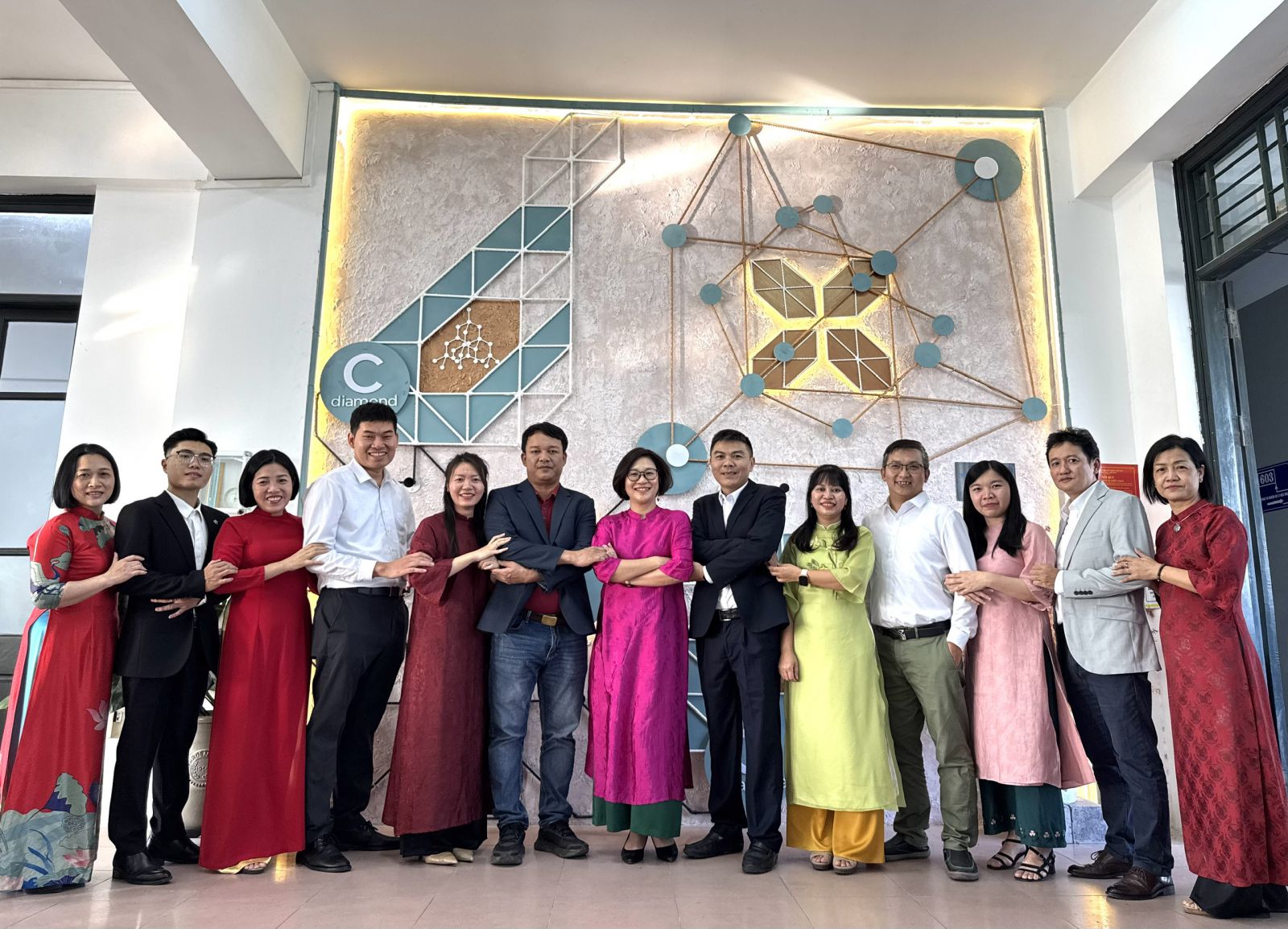
Academic Group of Chemistry
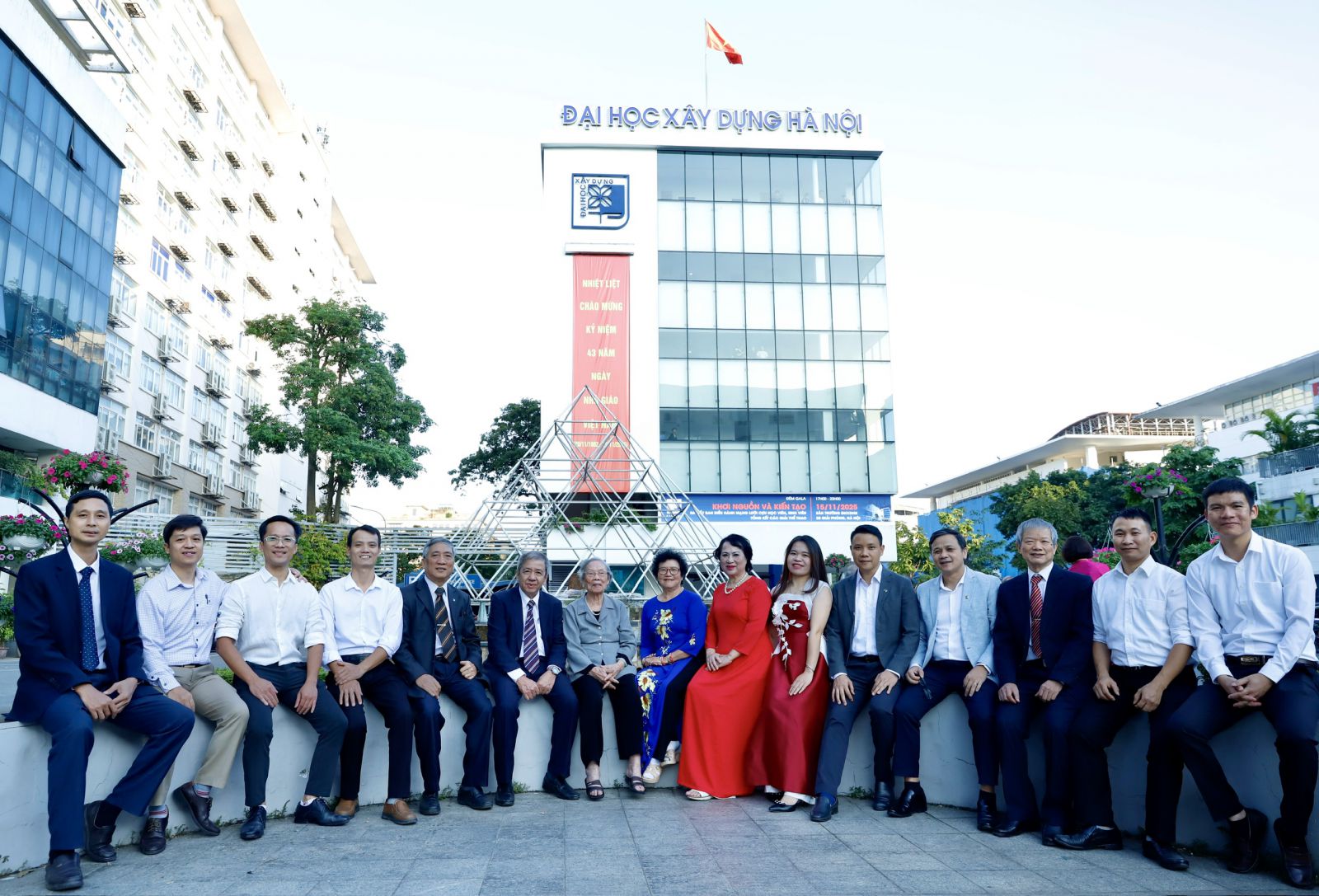
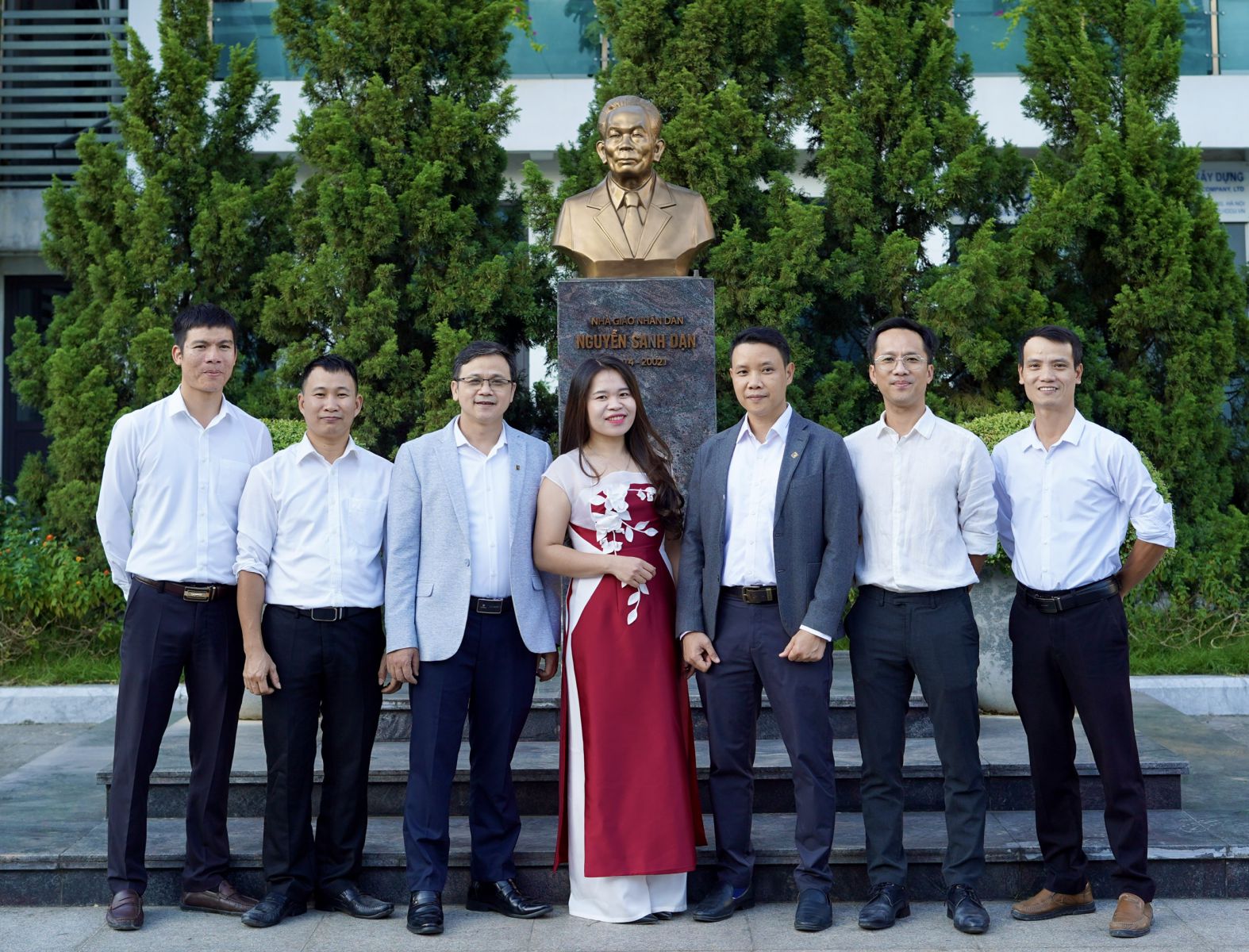
Academic Group for Testing and Studying of Building Materials