1. The advent of self-compacting concrete
In 1986, self-compacting concrete (SCC) was first proposed for research at Kochi University in Japan by Professor Okamura Hajime. Professors Ozawa and Maekawa at the University of Tokyo played a significant role in the continued research and development of self-compacting concrete. Using self-compacting concrete offers higher efficiency compared to conventional concrete because it shortens construction time, saves labor, ensures structural integrity in hard-to-reach areas, and reduces noise and vibration caused by the concrete compaction process.
Photo 1: Professor Okamura Hajime Photo 2: Professor Koichi Maekawa Photo 3: Professor Ozawa Kazumasa
2. Some construction projects using self-compacting concrete in Vietnam
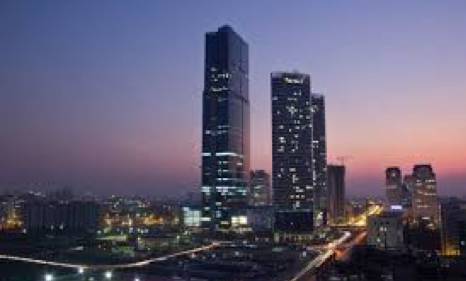
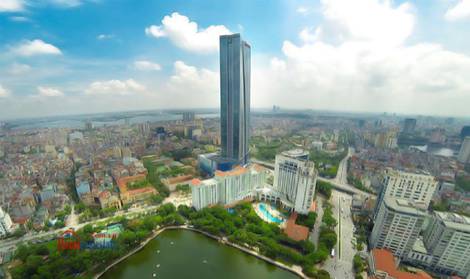
Self-compacting concrete has been studied in Vietnam since after 2000. In subsequent years, research on this type of concrete has not been as advanced, and the application of self-compacting concrete in construction projects remains limited. Self-compacting concrete has been used in the construction of several projects, such as: the transfer beams at the T34 building in Trung Hoa, some sections of the 72-story Keagnam Hanoi Landmark Tower (350m high), and the Lotte Hanoi building.
Photo 4: Keagnam Building Hanoi Photo 5: Lotte Building Hanoi
3. Research on self-compacting concrete at the University of Civil Engineering.
The Faculty of Building Materials at the University of Civil Engineering is the first institution in the country to provide systematic and comprehensive training in building materials at all levels: undergraduate, postgraduate, and doctoral. With a long tradition, top-quality training, and leading reputation in scientific research, it is one of the strongest institutions in scientific research and technology transfer, especially in the field of new materials. Self-compacting concrete has only recently appeared in Vietnam, but there have already been many research projects on this high-quality concrete. These include:
- In 2004, Associate Professor Dr. Nguyen Nhu Quy researched the production of high-strength self-compacting concrete based on the use of coarse sand and crushed stone as aggregates, Portland cement, limestone powder as mineral additives combined with superplasticizers and water. The finely ground limestone powder is derived from natural limestone, which is abundant, inexpensive, and distributed in most provinces and cities in Vietnam.
- In 2006, Associate Professor Dr. Pham Huu Hanh conducted initial research on the fabrication of high-strength self-compacting concrete in the laboratory, using fine aggregates such as coarse sand and crushed stone with a maximum diameter of 10mm, and mineral additives including limestone powder, rice husk ash, and silica fume. Rice husk ash is a mineral additive produced by burning rice husks and grinding them into a fine powder. This is a large annual agricultural waste product with virtually no economic value; it is often burned and discharged into fields and canals, causing severe environmental pollution.
- In 2019, author Tran Duc Trung successfully researched and developed high-strength self-compacting concrete using fine sand as a small aggregate. This type of sand has large reserves, a wide distribution area, and is much cheaper than traditional coarse sand, which is becoming increasingly scarce. The mineral additive used is a mixture of blast furnace slag and rice husk ash from industrial combustion using a fluidized bed furnace. The blast furnace slag mineral additive is produced by finely grinding blast furnace slag. This is a byproduct of the blast furnace iron smelting process. A large amount of blast furnace slag is discharged annually (approximately 4 million tons in 2018 and projected to be around 7 million tons in 2020). Therefore, researching its use as a mineral additive for cement, mortar, and concrete will bring high economic and technical efficiency, while also significantly reducing environmental pollution.
Some research images on self-compacting concrete at the University of Civil Engineering.
Image 6: SCC mixture Image 7: Flowability Image 8: Flow through J-ring Image 9: Compressive strength test
4. Self-compacting concrete construction
Self-compacting concrete in general, and high-strength self-compacting concrete in particular, is especially effective for high-rise and super-high-rise buildings, large-span bridges, sturdy underground tunnels, structures with heavy loads, high technical and aesthetic requirements, complex load-bearing structures, high reinforcement density, and large construction volumes. However, there are some points to note when constructing with self-compacting concrete compared to conventional concrete, such as:
- Precise material measurement is typically performed by mixing plants.
- Forced mixing or free-fall mixing methods can be used.
- Requires a longer mixing time.
- The process of flow loss can occur rapidly.
- Transportation using a hydraulic pump system.
- Pay close attention to formwork work, as the pressure exerted when pumping air into the formwork is very high.
- Greater shrinkage deformity, especially in early childhood.
- Maintenance work requires special attention.
Some images of self-compacting concrete construction.
Image 10: Reinforcement structure Image 11: Self-compacting concrete construction Image 12: Concrete surface after construction
Some video clips of experiments and construction of self-compacting concrete.
- https://www.youtube.com/watch?v=Nr-NdCoMhao
- https://www.youtube.com/watch?v=riWgbMOUIQ8
- https://www.youtube.com/watch?v=ht27KZy1sQI

.jpg)




.jpg)